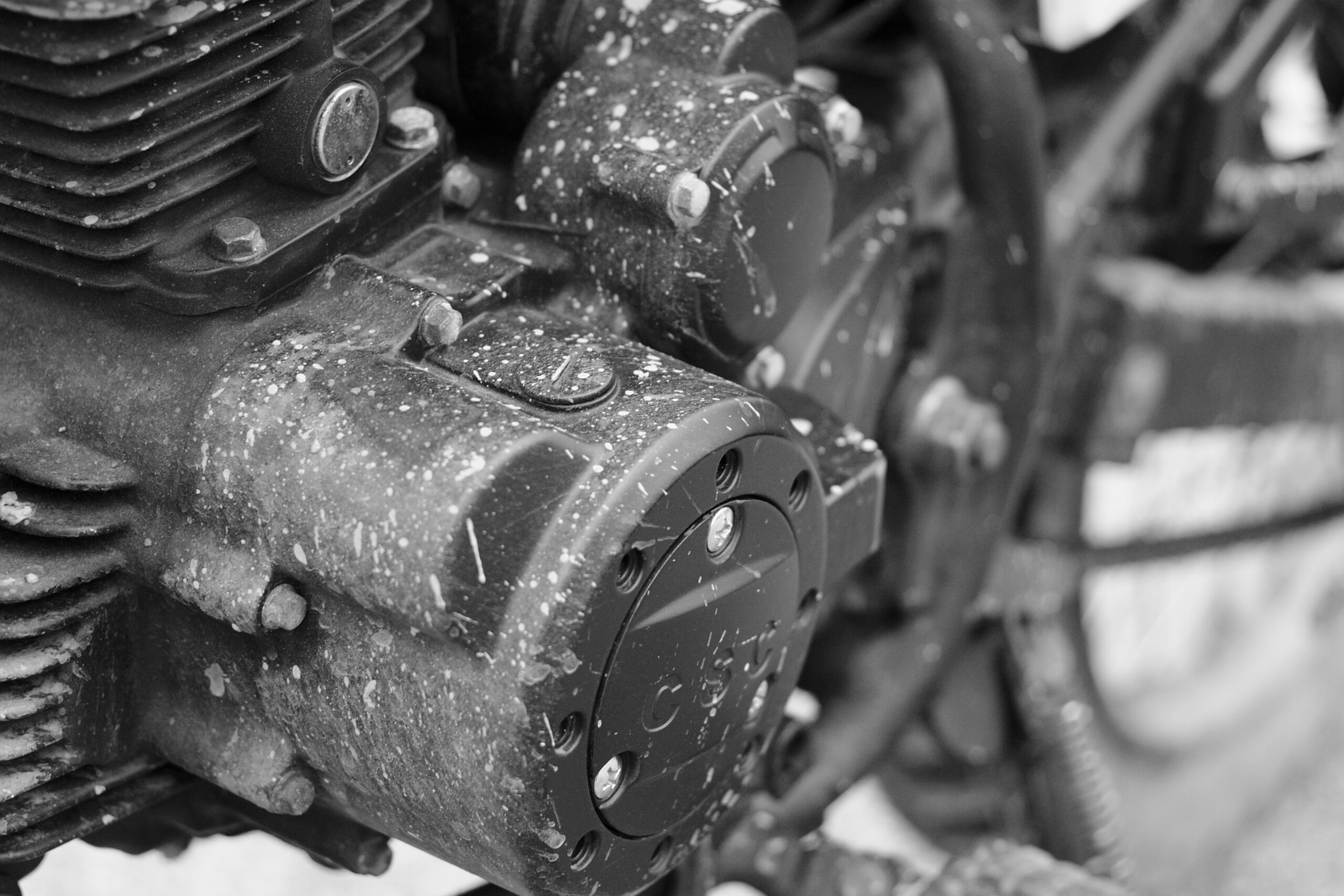
I spend all of my riding time on small bore bikes, by US standards. My Ninja 300 at 296cc and the CSC TT250 weighing in at 229cc.
The Ninja will – realistically – pull to about 75mph easily, above which there’s a tardy roll-on to about a top speed of 105, with my 210lbs astride it, at least. The TT250 will achieve 55-60 with nearly linear acceleration. The gearing limits it, with the engine turning almost 7000 rpm. It is possible to gear down via losing a couple of teeth on the rear sprocket, but I do not want to lose any more pull as it is about perfect for the hilly terrain here.
Both are easily quick enough for the street and back roads, but the TT250 isn’t really suited for superslab, at least not allowing for a safety margin.
If you take a 300 on a group ride and you have a lot of seat time on it, you’ll have no problem keeping up, assuming you’re not blasting down an expressway. On a technical road it’s a giant killer. It’s light, stops fairly well thanks to docile brakes and strong engine-braking, and turns in sharply. At around 18ft.lbs peak torque, you can pull silly amounts of throttle and it won’t get out of shape. In short, it’s easy to ride quickly. Get used to people telling you they’re surprised how fast it runs in a pack. It’s a truism that few riders (here, at least) have experienced the limits of their bikes, so they’re surprised how quick a ‘learner bike’ can run in familiar hands. They’ve just not spent enough time on one.
Ninja 300 territory
The TT250 is an absolute blast on tight, nasty roads with a poor surface, thanks to generous suspension travel. A very driveable engine with modest torque, it delivers power a lot more evenly than the piquey 300, but obviously there’s less of it. The bike’s turn-in is very rapid (it’s light at 320 lbs.) and it feels glued to the road thanks to relatively soft tyres. You can easily imagine why Dual Sports are such popular street bikes, not to mention their street-tyred derivative, the SuperMoto.
The downsides? Going uphill. Street bikes in the >500cc class will climb a hill while maintaining good acceleration. My 300 is okay as long as you keep the revs high. The TT250 really doesn’t like it; again my weight doesn’t help and maintaining some kind of fitness would help matters a lot. Aerodynamic drag, which squares with speed, is another. I’m 6’3″, and make a nice sail while sitting on the bike. Tucking low on the Ninja, stomach on the tank, makes a huge difference and I can’t reach the bike’s top speed without it. Running tight roads uphill is often easier in the TT250 due to the engine’s much wider torque characteristics, and short gearing. On a group ride, riders on torquey bikes will typically eat your lunch when accelerating out of tight uphill corners.
My recreational riding on Western PA’s fantastic roads is at a speed regime that is squarely within the 300’s performance envelope. Interestingly, this also goes for everyone I ride with, and that includes someone with a Superduke 1290. I too want a bigger bike sometime soon, and I’ve spent this year riding a few. So why, if all of my needs are met?
Well, they’re not. More power is more fun, and it’s also another thing to master. It’s why we ride, right? There’s more. With larger bikes come bigger tyres, typically better suspension, and stronger brakes. These usually bring a step in performance too. There is a specific scenario any small-bore rider is familiar with – and that’s overtaking. This is a most fraught area when you’re new to riding, as you don’t have enough power exactly where you need it, that is around 50-60mph with a small time window to get around a car. Overtaking is a reality when you’re on an aggressive ride; it’s a necessity. You have to learn to do it and you must know exactly what your bike will do. When in a group you need to exercise highly-disciplined judgement as everyone else will typically have a lot more power available, and they will use it to pass where you cannot.
There is also the matter of work. There’s a fine line between rider engagement and simply being busy, and on a long country ride at spirited speeds, you can be regularly at full throttle while constantly, constanty rowing through the gears. It adds up over a day. Being able to use a fraction of a bike’s performance to run at a pace your comfortable with makes a difference to your fatigue level. The 1000cc class bikes I’ve ridden have been an interesting change in workload. They are by no means ‘easier’ to ride, but they can be less work due to simply having far more performance available in a given situation.
A friend of mine finally sold her pre-gen Ninja 250 last year, and bought a rather handsome Yamaha FZ6R. She’s an excellent rider, and one of the things she was emphatic about was how relaxed it was on the highway, in terms of comfort and smoothness, so she arrived at the twisties with no stress. These things start to matter to you, after a while.
It had to happen sooner rather than later. The Ninja 300 has had a five year run, and now Kawasaki has thrown another 100CC at the formula (in what is apparently a new engine, not the re-sleeved ER-6 650cc that has been around for a while.)
So it’s got quite a bit more poke, and weighs less, that’s quite something. The H2-derived styling isn’t bad, it’s a very consistent family look now; the 2017 Ninja 650 has these cues too, along with the handlebar and dash style.
That’s as much as anyone really knows. I look forward to the reviews. No doubt the demo truck will be doing the rounds in summer, I’ll try and get a ride in if there’s one close by.
I have to say though, I really wonder where this leaves the 650.
Back in September I spent five days in Los Angeles at the 2017 Open Source Summit. I’d never been to California before. I wasn’t sure what I’d make of it. My wife thought I might hate the endless, dusty sprawl, but I had a certain fascination with the place through the same medium as most people: Entertainment. My perception of Los Angeles was formed through the lens of Michael Mann, James Cameron, and Kathryn Bigelow. Most of the metal bands I listened to in my youth were from California, and one – Megadeth – formed in Los Angeles. There is also something else that’s notable about LA, at least for the biker: California has the most sane motorcycle traffic laws in the United States. It remains the only state where ‘lane splitting’ – or filtering as it’s known at home – is not illegal. The wording is deliberately imprecise as it is not explicity forbidden, and the California Highway Patrol offered guidance but were obligated to withdraw it:
A petitioner complained to the Office of Administrative Law that there was no formal rulemaking process for the guidelines, and raised other objections. The CHP discussed the issue with the Office of Administrative Law and chose not to issue, use or enforce guidelines and thus removed them from the website.
Simply: No guidelines, because there’s no law.
Los Angeles, Sept 10 2017
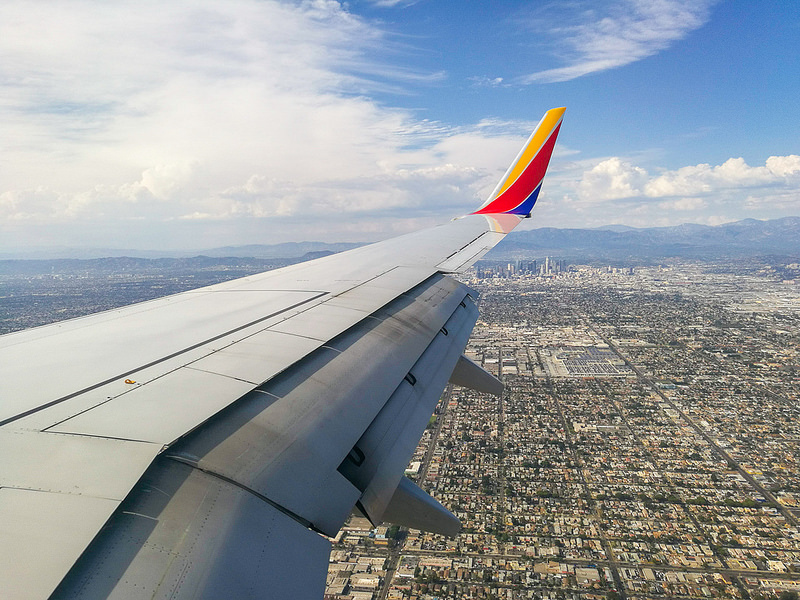
The sprawl of Los Angeles from my flight into LAX. Downtown is visible under the wingtip.
I arrived after a painless if long flight from St. Louis (nothing direct from Pittsburgh, natch) and slowly worked through a busy terminal 1 at LAX, waited what felt like an interminable time for my luggage and walked out into a perfect southern California evening.
I knew beforehand I wouldn’t be able to secure a bike; there’s plenty of rental opportunities in LA but given I had to pay my travel, car, and hotel expenses up-front I had nothing left in the tank for such an indulgence. I’d been in touch with a couple of SoCal internet people I knew, but this came to nothing. A pity, because as I’ll touch on later, I would realise a motorcycle is the best way to get around LA. No sooner had I walked to the shuttle stop at LAX I’d seen a Triumph Daytona whistle past and wished it had been me riding it. A car would have to do.
The shuttle bus took about ten minutes to get to an enormous Enterprise lot near the airport, and I ended up being allocated a metallic grey Kia Soul. I placed my phone in the console cup holder and turned the GPS app up loud enough to hear, and started the 14 mile run to the hotel, which involved a simple route of two freeways and a single exit.
Flickr Creative Commons via arbyreed
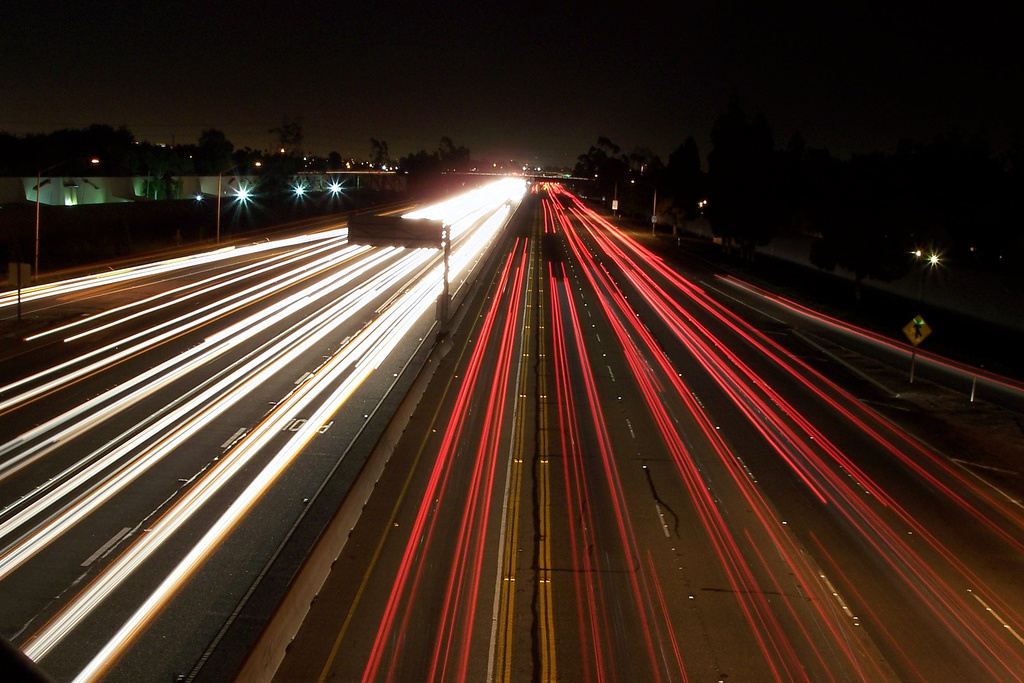
LA’s freeways are huge, and when they move, – which at 6pm on a Sunday they surely would – they move pretty fast. I didn’t get lost, which for anyone that knows me is a minor miracle.
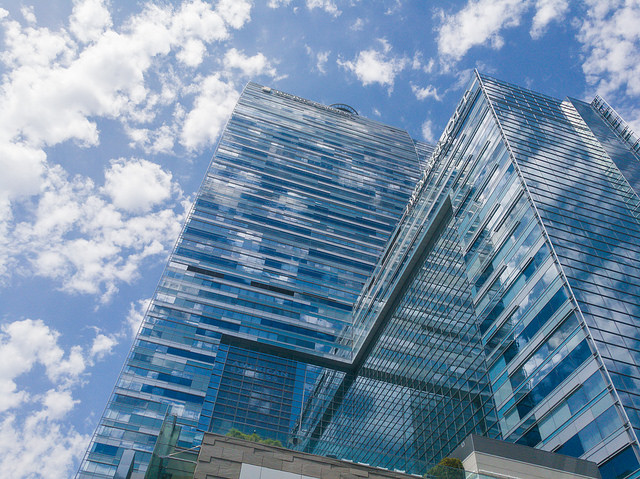
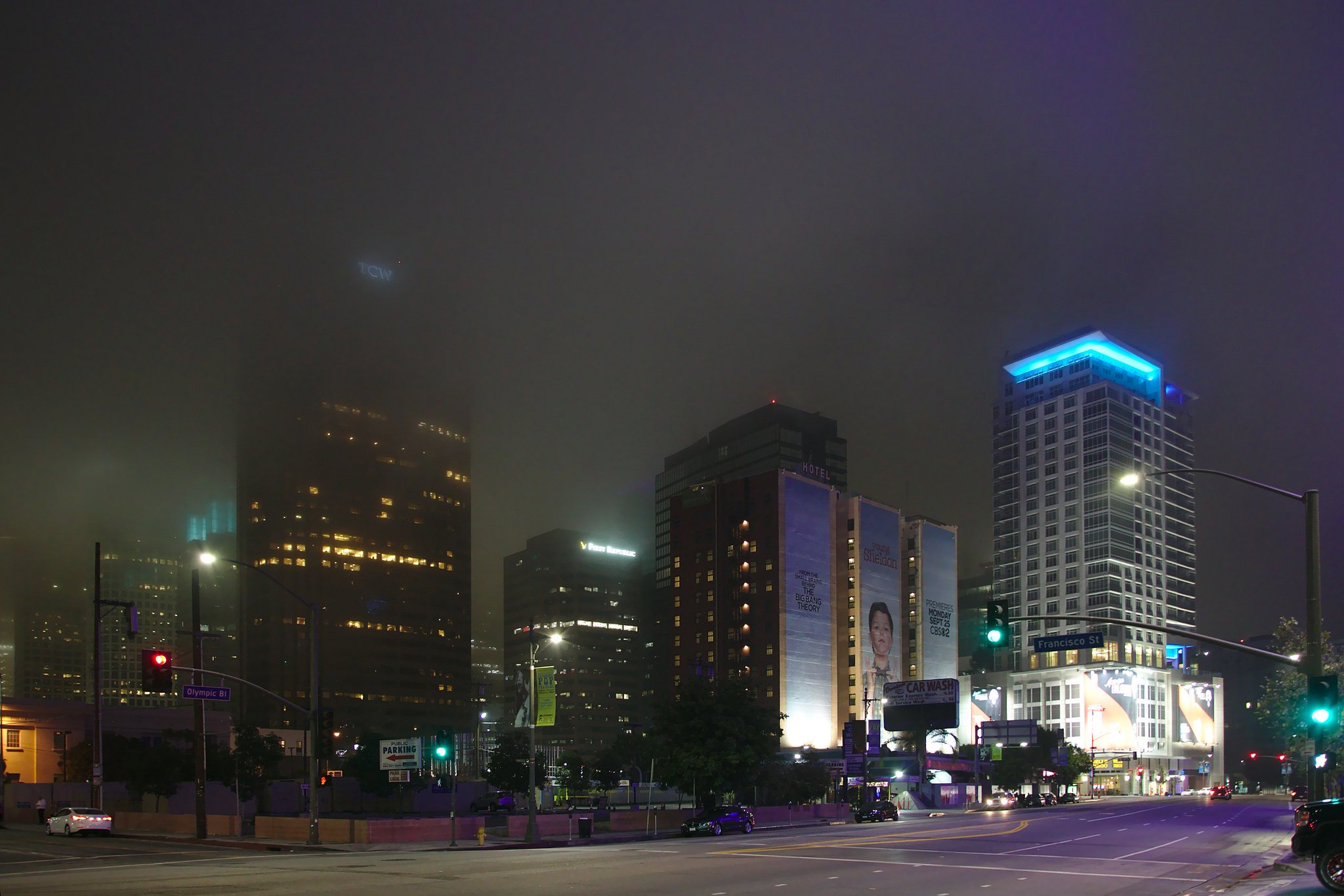
Downtown LA is, perhaps, like downtown anywhere. People don’t really go there for fun; it’s a sterile showcase of glass and steel; work and function. There’s the occasional panhandler. In this sense it is barely distinguishable from London’s Square Mile, Manhattan’s financial district, or the relatively diminutive Pittsburgh Golden Triangle. Like NYC, there’s a strange familiarity with place names, because you’ve heard them before from books and film. South Figueroa, Sunset, Wilshire, South Union…
I was booked into the J.W. Marriott Live, which adjoins the much taller Ritz Carlton on the western edge of downtown LA. It also happened to be the conference venue.
J.W. Marriot Live, LA.
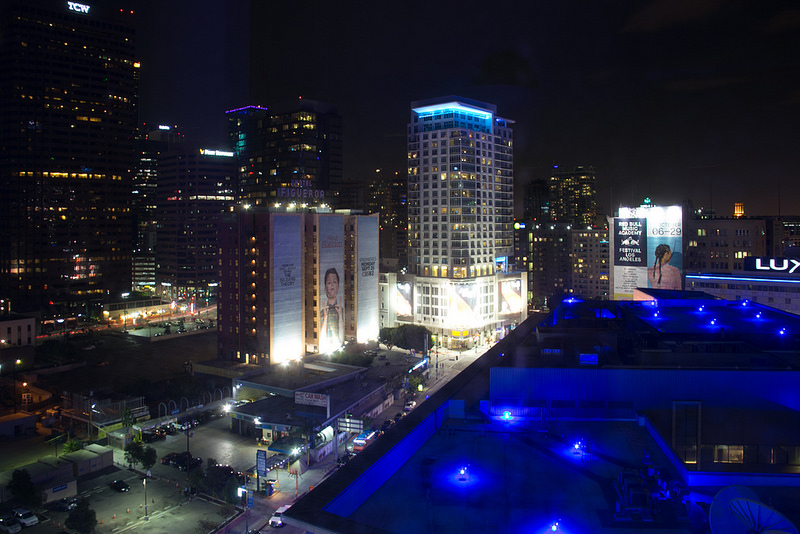
I used the gym and swam 50 lengths in the pool I had a burger and a couple of pints for dinner ($50!!!) as part of my highly disciplined healthy lifestyle, took a couple of photos from my hotel window while tired and buzzed, and soaked in the atmosphere from the view below.
The view from my hotel room
Feeling the effects of dinner and a long day’s travel, I rolled into bed and settled into a fitful sleep.
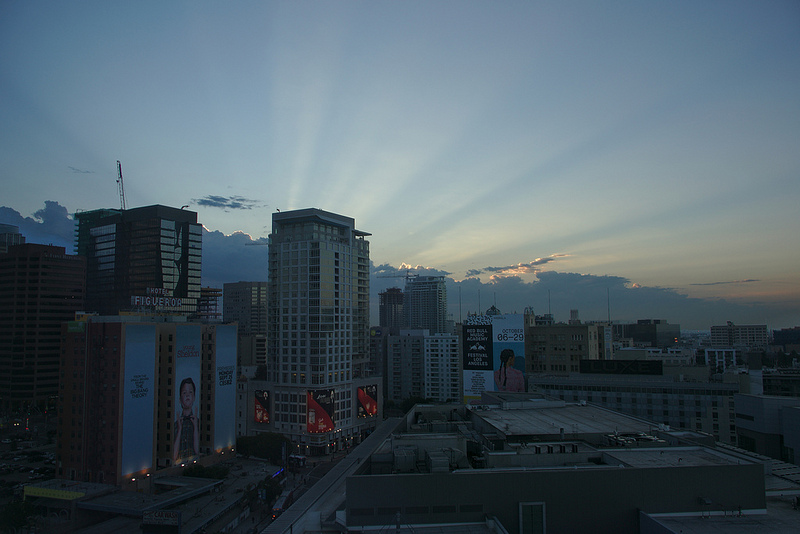
Out And About
Daybreak from my hotel room
As it turned out, I would have two full afternoons to explore LA. I wanted to see the ocean; and I knew going west would take me through most of the urban sprawl, so I intentionally avoided the freeway. The city has a nearly total grid system (unlike Pittsburgh, which was designed by M.C. Esher) so you could pick up a half-dozen roads anywhere within a block of the hotel and follow them all the way to Santa Monica on the sea front. I chose Sunset Boulevard because I knew the name and thought it might be interesting. This route would take me through Beverly Hills, Pacific Palisades, and eventually Malibu, so I hoped to see a range of neighbourhoods, although this is still a small fraction of the total sprawl.
Most of what I visited outside of the moneyed areas is dusty and slightly shabby, which was as I expected. It reminded me of some mediterranean industrial towns: Shades of magnolia and grey, lots of low-lying concrete buildings and iron railings, mom & pop convenience stores, fast food outlets, automotive shops and wide, heavily-trafficked roads. None of it was particularly alien to my eyes, but entirely different to everywhere else that I had visited in the US. The heat and light gives it a distinct atmosphere from the East Coast. You’re in the entertainment capital of the world, but you wouldn’t know it in the midst of the sprawl. It feels like and industrial town.
Suddenly the sidewalks get cleaner, the grass is conspicuously lush and cultivated (remember that this area was only just in drought conditions) and you’re in Beverly Hills. In truth, from the road there’s not a lot to see. It’s all tidy sidewalks, gated entrances and whitewashed walls under the shade of palm trees. The cars get more expensive, but there’s little character to the place. Pacific Palisades is easier on the eye, and there’s some fantastic architecture at some of the properties (sadly I could not get pictures) and some elevation changes as it is at the foot of the mountains. This area reminded me a lot of the wealthier parts of Capetown, up in the hills. I kept thinking this would be a cool place to cruise about on a Harley.
I took a quick detour through Santa Monica. It is like any city pierside scene; chintzy, seedy stalls cheek by jowel with more moneyed joints. It didn’t feel a great deal different to Atlantic City in New Jersey. The colour palette gradually changes from industrial concrete to whitewashed apartment buildings and houses, and after a short run you pick up CA-1: The Pacific Coast Highway.
The PCH takes you through Topanga Beach, which feels a little run-down and shabby, but has a certain charm. In Malibu I stopped for lunch at a ‘Country Kitchen’ (a chain) and enjoyed my coke & fries and taking in the atmosphere, listening to the Spanish chatter from the larder compete with the radio. There was the road and some villas between me and the ocean, but I got a little sea air. It was terrific, and I could have stayed there all day.
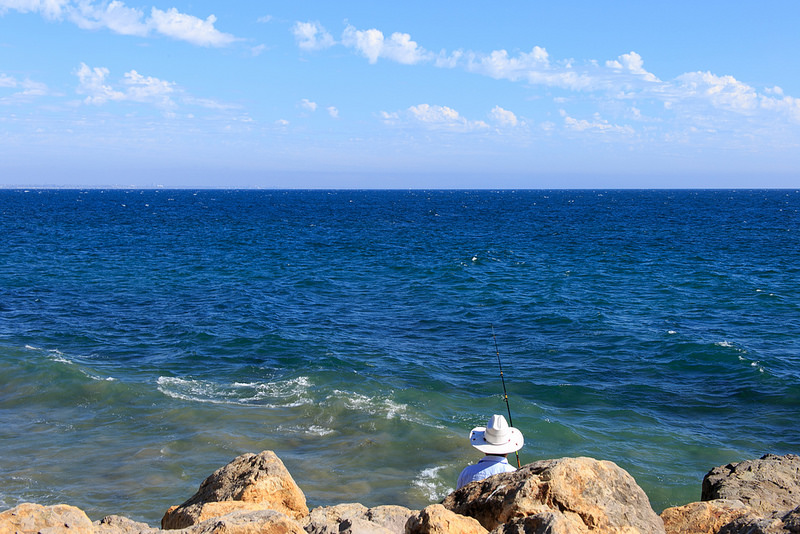
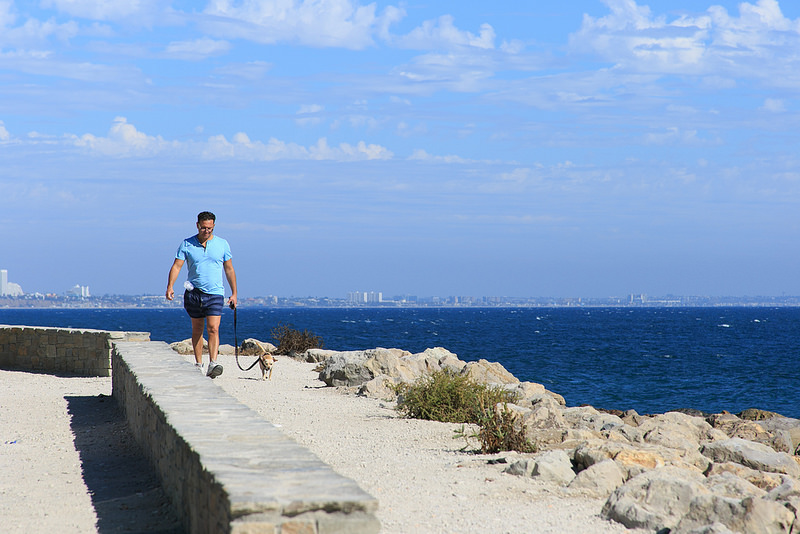
Topanga Beach fishermanTopanga Beach, Santa Monica in the background
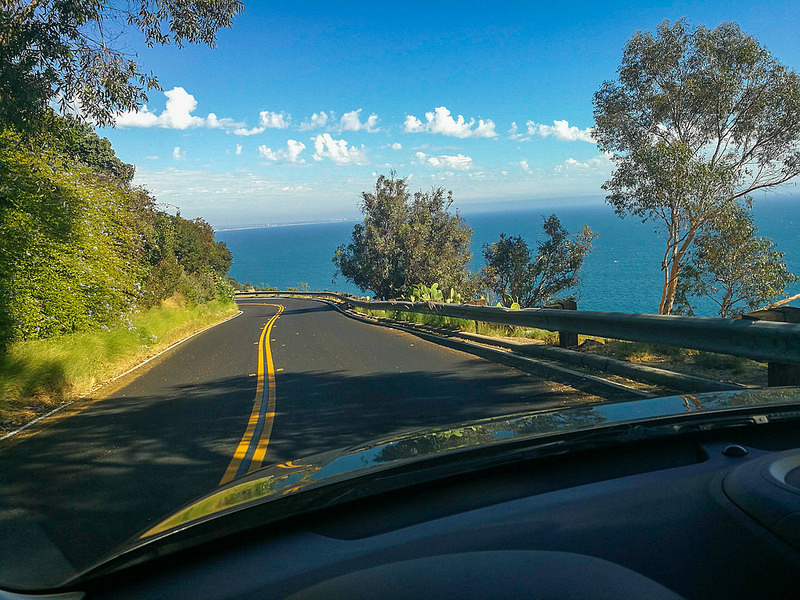
I knew Mulholland Highway (‘The Snake’, of some notoriety to bikers) wasn’t too far up the road, and I really wanted to see some of the famous canyon twisties, but both days would see me pressed for time. I drove up one of the roads off the beach near Malibu and enjoyed the view:
The pacific ocean from Big Rock Drive in the mighty Kia Soul
Malibu itself is obviously wealthy, I recall thinking of my Dad because it all reminded me of Marbella in Southern Spain; whitewashed villas, immaculate lawns set above a bright blue ocean, and that is a place I have only been with him.
Traffic
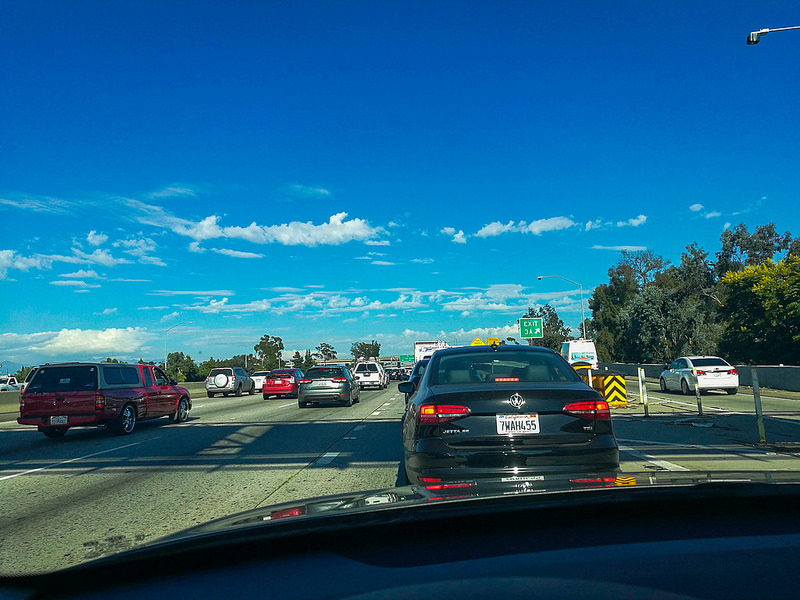
I decided to take the highway back. It was about 4pm. This would turn out to be very poor judgement. LA’s traffic has a reputation, and it is well deserved. It’s absolutely absurd, and the end result is that getting across town on highway 10 took me almost two hours.
This was my view for a couple of hours.
This was the real evidence for me that bikes were of the utmost practicality. Time and again I would hear the rumble of a Harley, or the creamy, reedy vibe of an inline-four and watch helplessly as bike after bike whizzed past.
As for LA, I really enjoyed it, and developed a certain fondness for the place. I definitely want to see more of it, and as the last day rolled over I was determined that I would come back when I can. Would I live there? That’s a big if. Who knows what’s around the corner?
Do i bring bike in't house at end of November & trim it up for Christmas again 🎄 or keep it on the road & hope for a mild winter ? 🤔 pic.twitter.com/HUpqiyPK1q
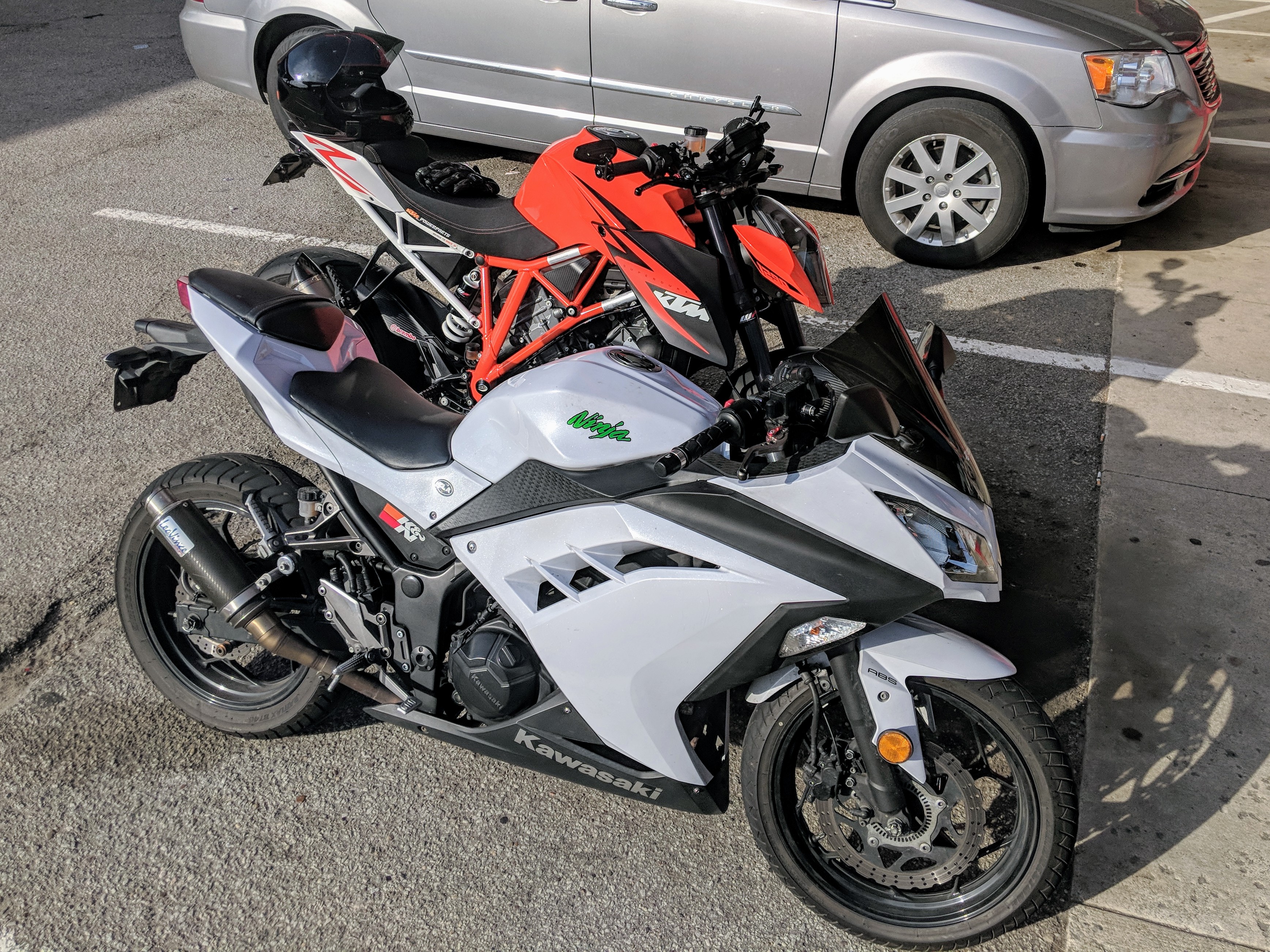
My Ninja 300 with Shane’s KTM 1290 Superduke, hours before I realised something was going very wrong with my vision.
I’d had a great couple of weeks. I’d just got back from visiting my Dad in Spain, along with my sister and beautiful niece (whom I had never met).
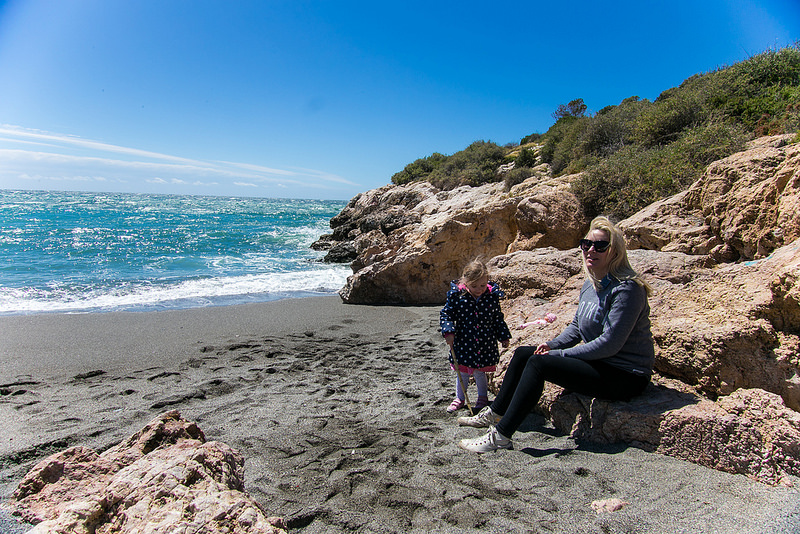
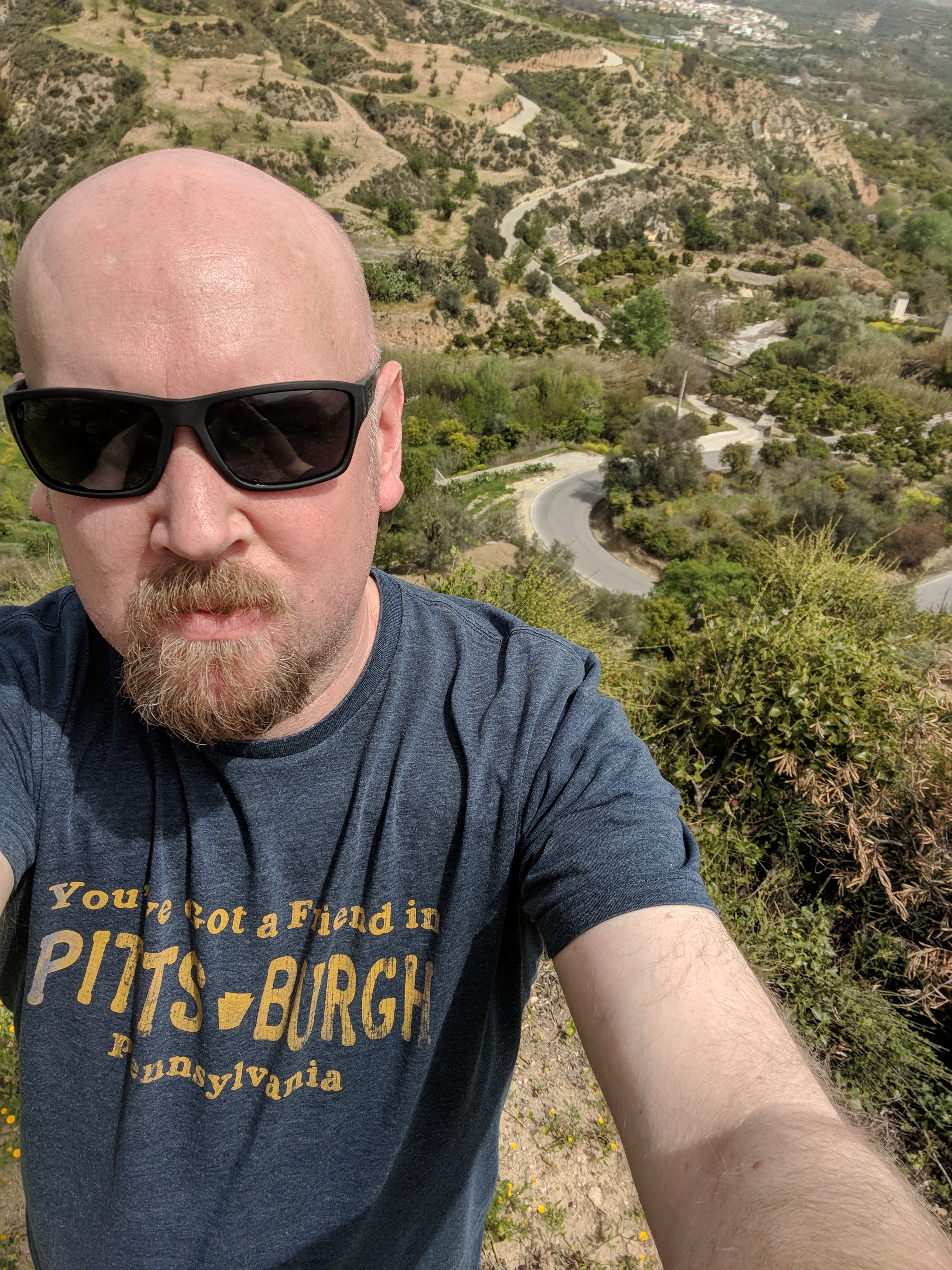
My sister and niece in Salobrena, Spain.Yours truly in the hills of the Valle De Lecrin, Spain.
Spain had really inspired me this visit, and I dreamed of being able to take a bike to some of those pristine roads in Andalucia. Maybe next time.
A couple of weeks back home had seen the unusually long winter finally give way to rising temperatures, and the longer day allowed riding with friends after work again. I met my friend Shane for a short ride out and meal afterwards to see in the new riding season. During the ride I became aware of something in my left eye; what looked like a large vitreous floater; the kind of ghostly web that one sees occasionally, but much larger. Later on, in the pub, it came and went. I recall thinking that in a certain light it looked as if someone dressed in black was standing in my periphal vision. Due to a sense of optimism and well-entrenched morbid fear of hospitals and doctors, I thought I’d sleep on it and see how it was the next day. I wasn’t especially worried at this point.
Well, you’ve got some blood in there.
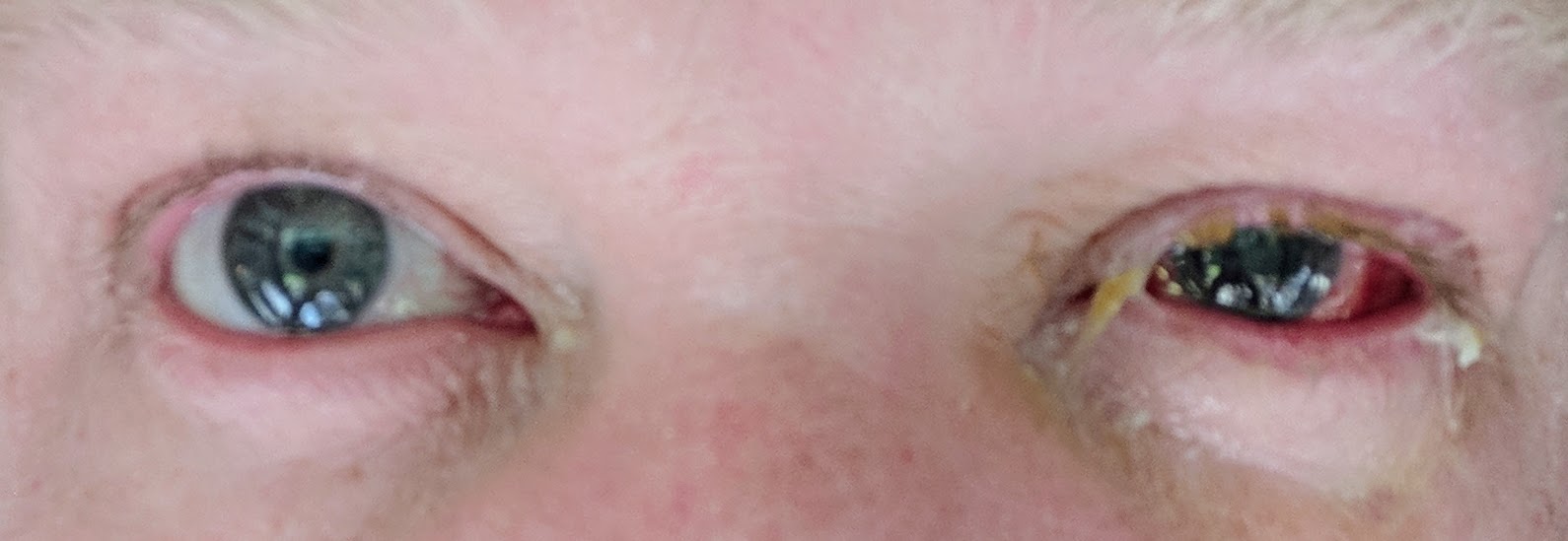
I awoke the next morning, and as soon as I sat upright that ghostly floater had turned an inky, impenetrable black. If you imagine your vision simplified as a rectangle, the bottom left-hand quarter was completely gone, replaced by a shapeless dark void.
Obviously this warranted a trip to the ER, which fortunately was just up the road. After handing over $100 (my ‘copay’) I was seen almost immediately. I described the symptoms and had to place a towel across my eyes, sit in the dark for ten minutes, and await the retinal scanner.
This machine, about the size of a coffee percolator, whirs and clicks as it locates your eye, then takes a picture. The ER doctor, a genial, middle-aged man looked at the images and said “Well, you’ve got some blood in there.” He suspected a ruptured blood vessel but was emphatic that he couldn’t say for sure. “We see about two per week. It’s common. Just not to you.” Fair enough, this was the ER, they were not going to be able to do much more. I needed to see a specialist at an eye centre as soon as possible, which as far as the ER were concerned meant the next day. There was no immediate urgency at this point; just a kind of calm hurry.
I called my local eye centre and was greeted by a receptionist with all the enthusiasm of someone that wished you were already dead. She told me they were full the next day, she’d have to ring around and would call me back (narrator: She didn’t call back). In the end I decided to call again and this time got someone useful that booked me in at a location the other side of town the next morning.
Sewickley, PA. 11th May, 1100hrs
Oh, that sounds like a retinal detachment. I hope not.
By this time, it had got worse. If I had to describe it in percentage terms, I’d estimate that around half the vision in the left eye was gone. I was scared, my family was scared, and I was starting to feel the onset of some panic. what could be wrong with me? Was it just my eye, or was something else happening?
The triage nurse was efficient, funny, and had a bedside manner that definitely needed a bit of work. She was also, as it turns out, right on the money. As I described my symptoms and she established what I could and couldn’t see by moving her hand around my field of vision, she casually uttered “Oh, that sounds like a retinal detachment. I hope not.” I could have lived without hearing the last sentence, but in hindsight (ho ho ho) I suspect she was referring to the fact this would not be a quick fix, rather than a gloomy prognosis. I was then left in the waiting room for an hour to ruminate (in an extremely anxious state, as you might expect) on what I’d been told. My eyes had some drops to dilate them, so I strained to read my phone (battery: 20%) to try and figure out just how much shit I was in, all the while sending nearly unintelligible text messages to my wife waiting outside with the kids.
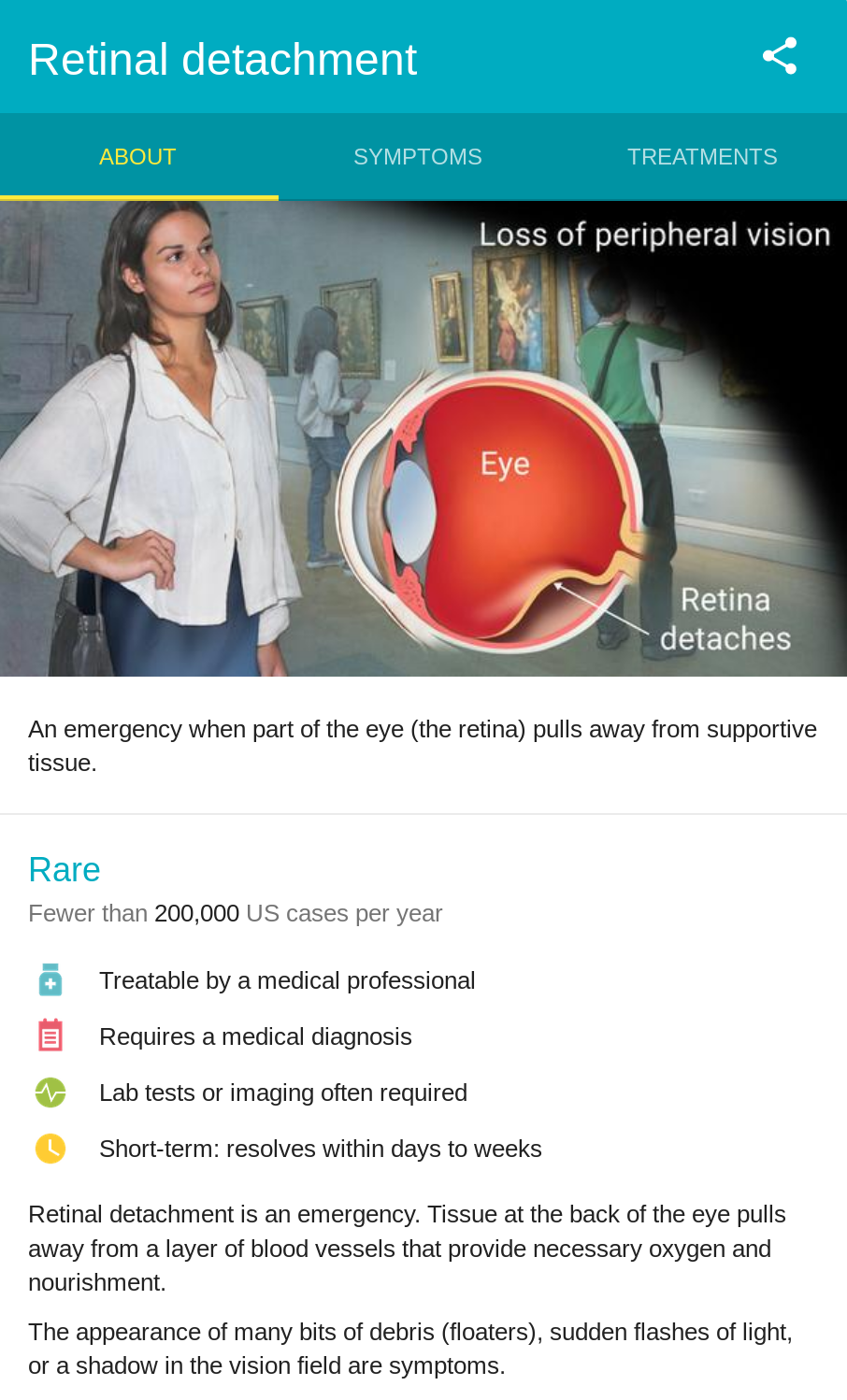
Here’s Google’s card about retinal detachment, also featuring an image of an attractive woman in an art gallery, if you like that sort of thing.
When the wait was over and I saw the ophthalmologist, she was absolutely brilliant, warm-mannered and confident enough to greatly reassure me, and confirmed the triage nurse’s suspicions: It was a retinal detachment. I had three small tears at 9,11, and 2 o’clock, the most common form, known as rhegmatogenous detachment. Why? Age and plain bad luck (National Eye Institute, 2009). It would require an operation, and the Dr. told me she would be calling around to find a surgeon, and that I was not to eat anything as the operation might be that day. It was at this point I realised this was fairly serious, but the nurse and doctor confidently assured me I would be fine.
Word came I was to head to UPMC Mercy for surgery immediately. My wife, cool as a cucumber under what must have been enormously stressful conditions with two children to look after, took me there straight away.
UPMC Mercy, 1445hrs
You’re sitting there, minding your own business, and your retina just decides to go and detach itself.
I’d been lucky. I’d never had surgery. First stop was pre-surgery testing, which would typically involve obtaining blood for analysis, but actually turned out to be nothing but verifying paperwork in my case. No blood work required. Then I was admitted which was a matter of bagging my clothes and belongings, donning a gown and letting the scrubs-wearing ninjas get me ready. The surgeon and the fellow assisting him (both absolutely brilliant guys) came to see me, and he introduced himself with a jovial “You’re sitting there, minding your own business, and your retina just decides to go and detach itself.” They both examined my eye and told me the plan: A sclerical buckle, and probably a vitrectomy, due to the number of tear sites. A sclerical buckle is a small band that is fixed around the circumference of the eye like a belt (hence the name), the purpose of which is to apply pressure and help reattach the retina. Due to the offset of one of the tears, it probably would not be sufficient on its own, so a vitrectomy would be required. This involves draining the vitreous; the gel-like liquid inside the eye which maintains the spherical shape. Two precision techniques, laser and cryopexy are used to bond the torn areas of the retina to the wall of the eye. A gas is then used to form a bubble temporarily replacing the vitreous (National Eye Institute, 2009).
The surgeon marked his initials just above my left eyebrow. He described this was necessary to mitigate what is considered a ‘never event’. I’ll let you guess what…
I’d lost track of time at this point. My pupils were profoundly dilated. My watch had been removed and I could no longer read the clock above the nurse’s station. I was wheeled off to the anaesthesia area to prepare for the op. After a chat with the anaesthetist and a great deal of questions I was rolled into the operating room. An oxygen mask went on, the IV was started, and shortly after that, the lights went out.
I came round with no pain, intense nausea, and a big old bandage over my left eye. I had my face in a horseshoe-shaped pillow; until my follow up appointment the next day it would be necessary to keep my head down so the vitreous gas bubble would maintain positive pressure against the retina (Retinadoctor, 2018). The nurses were fantastic; one of them put something in my IV to relieve the nausea and it stopped in a snap. I couldn’t quite read the clock so I wasn’t sure if it was 915pm or 245am. It was the former, thankfully. My wife and kids charged into the recovery room and I felt a lot better.
The nurses helped me into my clothes and I was on my way, almost 12 hours after the day had started.
Aftermath
As I write this, it’s one week later. The follow up appointments revealed the surgery had been successful, now it was a matter of waiting for everything to heal. I feel pretty fortunate, as I never had much pain and the swelling (which was profoundly unpleasant) reduced rapidly. The vitreous gas bubble has shrunk as it is slowly absorbed and replaced by vitreous fluid; I can clearly see its circular shape in my eye. My sight isn’t quite there, it’s rather fuzzy, but it is improving, and it is all there. Best of all I have my peripheral vision back on the left side; I can drive again and I don’t feel dizzy anymore. There is a possibility of developing a cataract as a result of the vitrectomy (NCBI, 2014), which will require further surgery, but I’ll deal with that down the line. It beats being blind.
Some things fall into perspective at a time like this. One of them is, if you have a problem with your eye, don’t fuck about. I should have got it looked at immediately. It may not have changed the outcome, but it could have made things easier, and the extent of sight loss would not have been so great. I’m also fortunate to have such a great wife. We have no help, it’s just us and one or two friends. My wife looked after everything.
Life is short. One moment I was out having fun with a friend, suddenly I’m looking down the barrel of sight loss. Isn’t it amusing how many of these metaphors involve sight? I can tell you my sense of humour has had quite a workout in the last week.
I’m not dying (well, no faster than anyone else), I didn’t go blind, I’ll probably ride my bike this week. I’m pretty lucky, all told.
It is deeply unfortunate when any business shuts down – it’s jobs and people’s livelihoods, and even if I wasn’t enthusiastic about this scheme I’d rather they’d have at least stayed around.
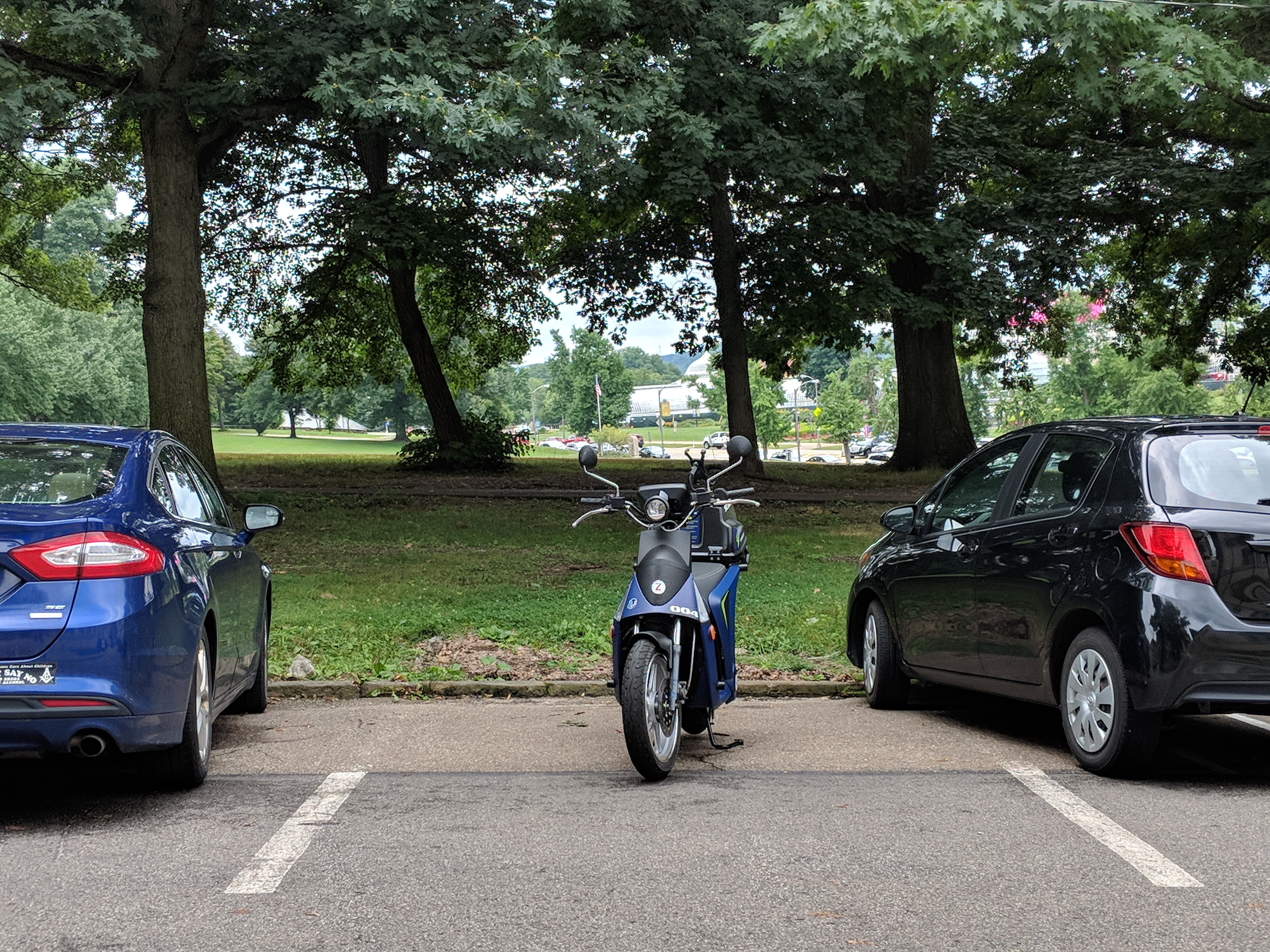
These mopeds weren’t the right fit for the city, but instead we’ve got fucking hordes of these motorized scooters that are all over Oakland like a rash. The students – for the most part – seem to love them.
A Fish Out of Water
Utter madness.
I give it a very short amount of time before these are getting pushed over or vandalised by irate drivers. They’re all over the East End of the City, occupying car parking spaces. If you’ve travelled to London, Paris, Madrid or anywhere with a true multi-modal transport network you’d think this was absolutely absurd. Why don’t they use dedicated parking, or those nooks and crannies that so many cities have? Well, this is Pittsburgh.
Scoobi is a mobile application based on-demand mobility service for individuals in need of rides to their preferred destination by way of an electric scooter.
Translated, somebody has secured VC funding for a fleet of battery-powered scooters in a season-bound city that it is a textbook example of the primacy of the automobile.
I cannot think of a worse place to try this, apart from perhaps Antarctica. Somewhere with the cultural and legislative foundations like California, despite being worse for just about everything else, gets it right when it comes to two wheels. PA is still stuck in a time when two wheels means you’re either broke, a hooligan, or a dentist playing Easy Rider on a $30k Harley. Scoobi, for what it’s worth, is a great idea on paper. However, this progressive, environmentally friendly platform is in a city whose culture is heavily, but not totally (more on this later) dominated by the car. For example, here is an excerpt from the PA Driver’s Handbook:
A motorcycle is a full-size vehicle with the same privileges as any vehicle on the roadway.
Yes, dear reader. You read that correctly. And yes, these are considered motorcycles. Just roll that around in your head for a moment; savour the utter madness.
A motorcycle is a full-size vehicle A motorcycle is a full-size vehicle A motorcycle is a full-size vehicle A motorcycle is a full-size vehicle A motorcycle is a full-size vehicle A motorcycle is a full-size vehicle
This removes the inherent advantages of a powered bike at a stroke. You can’t filter or lane-split; you are limited precisely to the same freedom as a car well over four times your size. There is zero dedicated infrastructure around the city for scooters and motorcycles. What could be a burgeoning market for deliveries and efficient commuting is stymied by totally backward legislation. Instead you wait in traffic and park as if you are a car.
The result? Individual scooters and motorcycles using a full car parking space, which – if you are familiar with Pittsburgh drivers antipathy to anything that isn’t a car – is not going to have a happy ending. Why use one? What you are you gaining?
The Exception that is BikePGH
BikePGH are little short of amazing. They have done an amazing job in cycling advocacy, and it’s fair to say they’ve successfully challenged the dominance of the car, at least in the city limits. Pittsburgh now has some dedicated bike lanes, and a growing cycling culture. It’s helped by some unusual unspoken privileges granted to cyclists; namely filtering and being able to sensibly roll some intersections; consequently cyclists that have overcome the fierce topography of Pittsburgh can get around more efficiently than anything else.
Realistically, powered bikes need their own version of BikePGH, or the roads will never be opened up in a manner which makes them truly practical. I can’t help but think Scoobi has put the proverbial cart before the horse.
I can’t get a job, because if I had a job I wouldn’t have enough time to vlog.
The above quote isn’t attributed to anyone in particular, it’s rather a sentiment I’ve seen expressed a few times recently.
Motovlogging culture – those guys that go out on their bikes and record it for our entertainment – has become a big part of the motorcycle media landscape in recent years. I won’t namedrop because it’s vulgar, but like most entertainment media, the majority are forgettable, and a very few are excellent. Like most media, there is not always a correlation between quality and a channel’s success. In short, there are some utter clowns that have become very successful, and some truly great channels that languish with low views. If I understood why that is, I’d be vlogging myself.
That success has brought financial rewards, although it’s difficult to know how much, as both Google and the channel owners are cagey on the subject; it’s fair enough – it’s nobody’s business but their own. However, the mere suggestion of money can be ruinous to men, and creates something of a gold-rush mentality. I’ve seen a couple of vloggers give up their day jobs and chase YouTube money, and when it hasn’t quite worked out,they resort to asking their viewers for help with the bills. I believe one of the drivers is they’ve done just well enough to convince themselves it’s viable. I dislike myself for it, but this brings out the cantankerous old fart in me. Nobody’s owed a living, and if you can’t make it work you’ve got to be realistic and think about how to go forward. That might well involve having to take a regular job for a little while to make ends meet, and taking stock of the fact that you’re choosing to compete in a phenomenally crowded market which, to make matters worse, is only getting more competitive.
This reminds me of conversations I used to see on photographer message boards in the early 2000s; specifically the ire of professional photographers towards amateurs giving their work away either for free, or well below market value. The rush of consumer DSLRs and affordable pro-grade editing tools meant their world had changed; the barrier for entry was lower, their slice of the pie just got that little bit smaller.
YouTube is no different. The barrier for entry is again very low, and the productions standards on many channels are really very impressive, and this can only mean more competition for views. Some of those guys that are at the top of the pile now would certainly struggle if they were just starting out, but that’s capitalism; ’twas ever thus.
I feel bad for a lot of these kids, because they’re talented and they are entertaining enough, but YouTube’s model is based on a tiny number of winners and a lot of losers. Is it fair? No, but when was life ever fair? I suspect if you crunched the numbers, it would not be that different to the rest of the entertainment industry
Should they be paid? Unfortunately, that decision has already been made. You can consume gigabytes of video entertainment on YouTube for the cost of an internet connection and a device to watch it on; you just have to put up with the ads. Where that money then goes is up to Google, but you can be sure they’re the biggest winners. That leaves Patreon and similar services, but given the huge number of free channels out there I’d be surprised if there’s much money to be made there if you’re not already a giant channel somewhere else.
I’ve had a rough year, health wise. I’ll write about it at some point. Consequently I’ve had lots (too much?) of time to think, and as is human nature I’ve looked backwards a fair bit, so excuse the nostalgia.
I’m not sure what prompted it, but I got thinking about my college days. College in the English sense (further education, 16-18yrs) as opposed to university. My first run at university was abortive, so college took on particular meaning for me as it would become the closest I got to the 3yr university experience.
I’d been at a rural grammar school in East Yorkshire for 3 years. I absolutely despised it. It made me miserable, shattered my self-confidence, and I struggled academically. I had been in and out of schools my entire childhood due to frequent relocation around various parts of the world; I was already behind when I started secondary education and the truly shitty school environment only made things worse. My GCSE performance was predictably poor. I hated school, I didn’t want it, and it apparently didn’t want me – I was not invited to continue on to A-level study.
I moved to the city of York in summer 1990. I was to attend York Sixth Form College, but as my GCSE results were poor I had to complete a foundation year, which would mean I’d be there for three years in all, assuming I continued on to A-level; not everybody did, as there was a technical college (vocational) down the road that was also on the foundation year pipeline. Some people simply went straight into employment, with no continuing education.
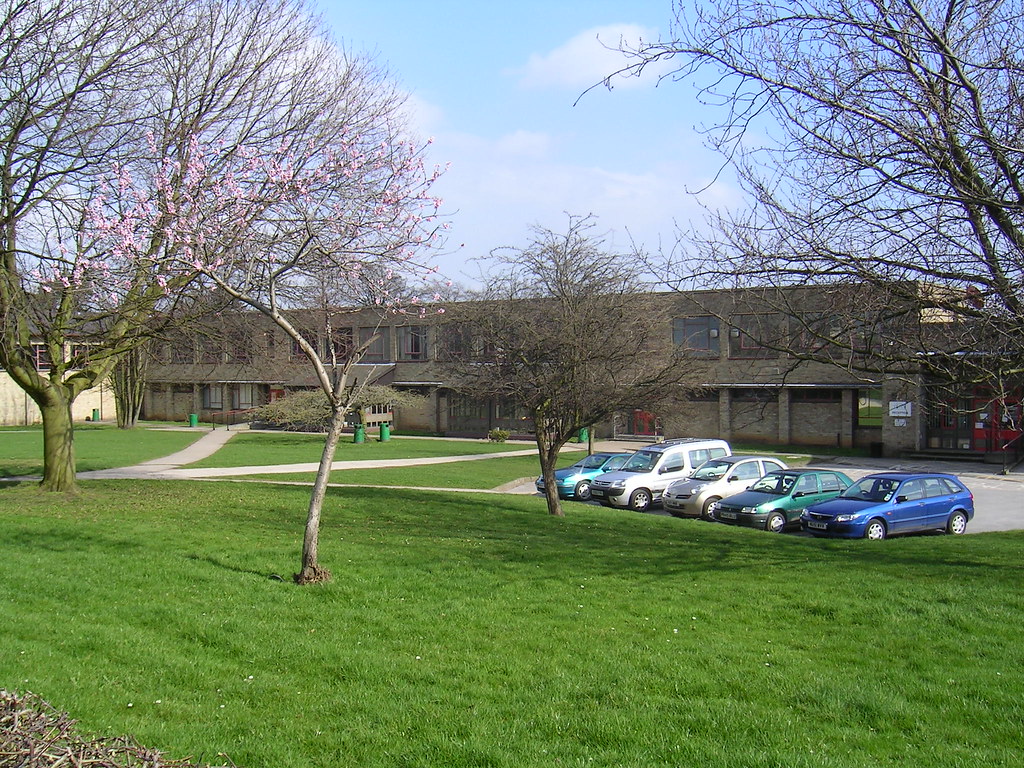
The college was located on the southern edge of the city, next to the green belt. There was little beyond it but fields and the motorway. It had been operating as an FE college for 5 years, prior to which it had been a secondary school. It had around 900 students (the number surprised me. I would have guessed less than half that) and in hindsight with the benefit of years of FE/HE experience from the inside the college was small, utilitarian, and dated even by 1990 standards. And yet, it was more than the sum of its parts.
Front of the College, photographed 2005 by Neil Turner. Source
I had a lot of questions; and I was quite apprehensive. It was the first state institution I’d been to since primary school. I told myself I was worried I wouldn’t fit in, but the fear was deeper than that; would I even survive? It’s stupid and laughable now but having been in private educated for previous 8 years I picked up some completely stupid stereotypes about what to expect from state schooling. I considered it perfectly likely that on hearing my accent I’d probably get beaten up. I had an intake interview with the college principal and he seemed so kind and welcoming. Honestly, the fact he wasn’t a complete arsehole already put him ahead of much of my grammar school staff experience. It was a decent start. “See you in September!”.
I needn’t have worried about anything. My first year had some difficulties; I’d been relatively sheltered and I faced a period of shrugging a lot of that baggage off; I had to relearn who I was, loosen up a little bit, but the environment was simply amazing to me. You were treated like an adult; you could dress how you liked (within reason…) and were encouraged to be an individual. The teachers were fantastic, even though I didn’t quite recognise it at the time. The students came from everywhere, but predominantly secondary schools within York itself. A fair few of them knew one another, but generally making friends was pretty easy. The biggest eye opener was nobody gave a shit where I was from. I think I’d totally forgotten about my old school by the end of the first term. I felt like a different person. I grew my hair out, had a few illicit beers (sometimes during lunch!) and generally had a blast.
Academically I did better, but not much better. Just good enough. I was absolutely distracted by a new found social happiness and was for better or worse not worried about the future. I progressed onto A-levels, grew my hair even more, joined a band (We were shit. That wasn’t our name, but might as well have been) and just kept going. I had lost a few friends after foundation year. Some went onto apprenticeships or ‘The Tech’ down the road, but this wasn’t an impediment at college, largely due to the fundamental layout of the place.
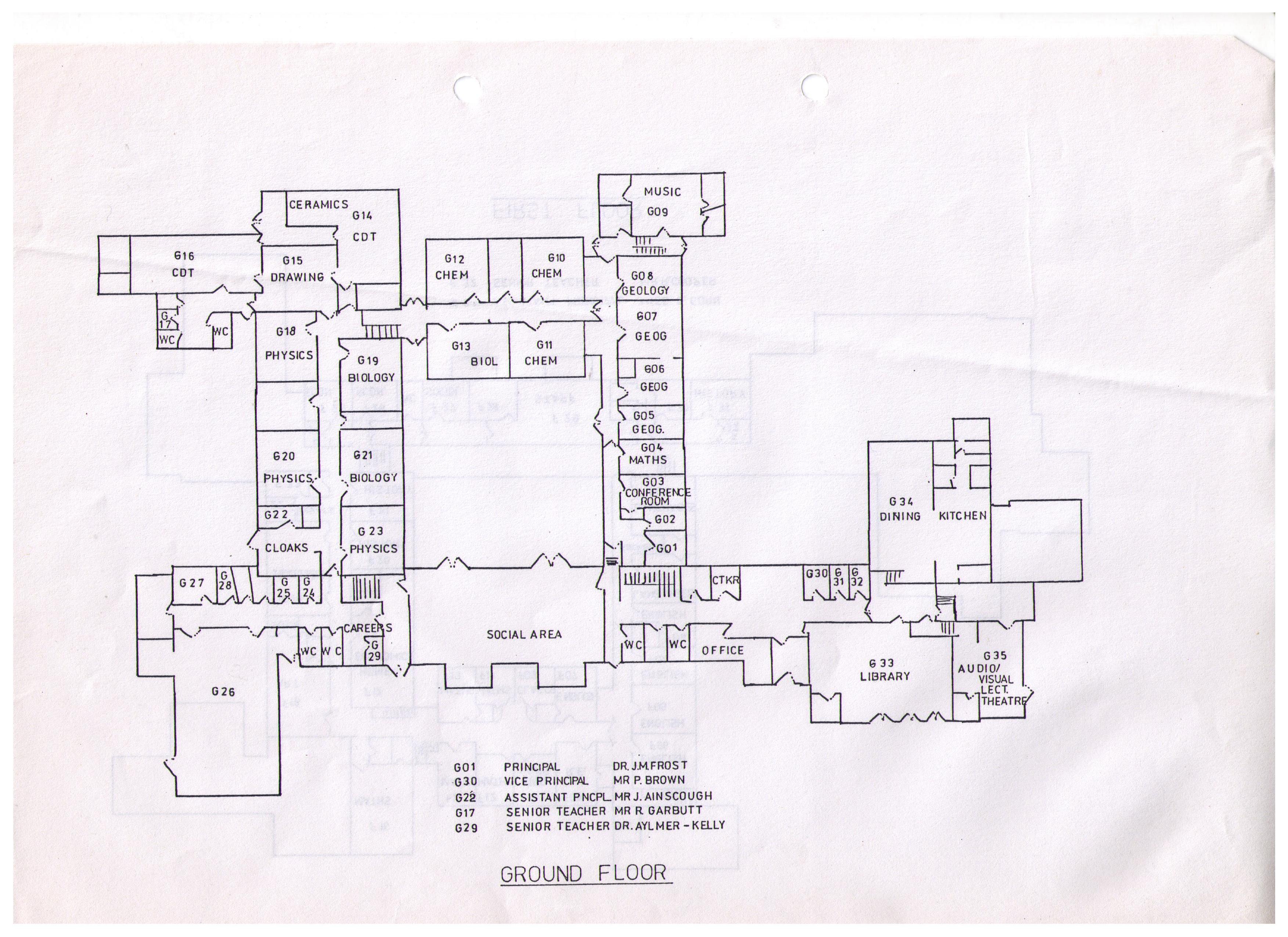
The building featured a large room named the ‘social area’. It was really the focal point of the block. It wasn’t huge, less than 100ft long and about half as wide, and was open plan, with moveable bench seating. They were beige and pink, as I remember. Before classes started in the morning and during lunch, it was absolutely rammed. Because of this, boundaries really broke down; it didn’t matter much what year you were in, or what you were studying, you could get to know people. There were certainly cliques, but everyone pretty much got along. It amused me how that room could change in character dependent on the phase of the timetable. During free periods it occasionally took on a monastic quality with just a handful of people in it. It wasn’t anywhere near large enough for the entire student cohort at one time, so people spilled out into the corridors and the canteen, but generally the social area or the immediate vicinity was where it was at.
Time continued its march and in June ’93 I completed my A-levels with fairly average results. A decade later after some epic fannying about, and in a different part of the country, I would end up working at an FE college. I never really made much of a connection before, but thinking about it, just being in that kind of environment felt right to me, and I’ve been working in education ever since.
York, March 2007
I’d been visiting my dad who had recently moved North again. We’d taken a trip into York on a rainy Saturday. It had been my first visit in about 8 years. He asked me if I wanted to go out along Tadcaster road, “go past the college” as he put it. Sure, why not. I already felt a bit subdued by the grey weather, and that odd feeling of knowing a place but not knowing anybody in it anymore.
It was gone. Completely gone. A huge, modern building was in its place. I was surprised to feel really quite emotional about it.
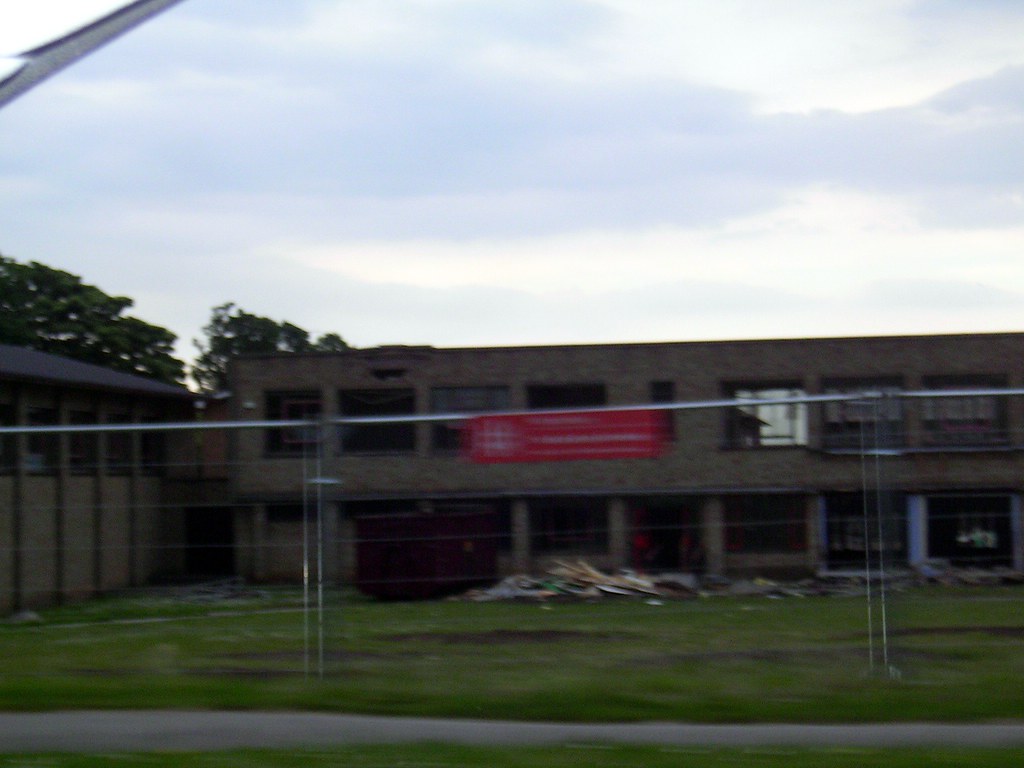
When I got back home I looked it up, emotion giving way to curiosity. It was a brand-new campus opening that September. In 1999 the College and Tech had merged. In 2005 the complex as I knew it was demolished to make way for the new buildings.
Demolition underway in late 2005. By Neil Turner. Source
It looks fantastic, and was quite necessary. I was sad to see the old building go with all those memories, but the college most definitely needed more space, not to mention the facilities offer for teaching. Like most further education colleges, there’s a strong vocational emphasis now, rather than the original purpose which was essentially a finishing school for university. The original college could only deliver so much given its origins as a modest school.
I wonder if it has a social area?
Google and a rose tint
York Sixth Form College existed largely before the digital epoch, and definitely before social media/web 2.0 (sorry) took off. There’s depressingly few photos of the place as I knew it. I have some envy for students nowadays as they have a glut of images to look back on when nostalgia descends.
I found a few on Flickr (which I’ve already posted), and some unlikely sources: Writer and journalist Sophie Heawood popped up from a Google search; I immediately recognised a photo she had posted in an article as being the bike shed/smoking area (the official one, anyway…). Those Portakabins in the background were ostensibly temporary. I suspect they remained to the bitter end. Anyway, It’s a good read, and if my arithmetic is right based on what she wrote, I may have been there during her first year. It’s a small world. A friend was also, er, kind enough to share one of me. Christ.
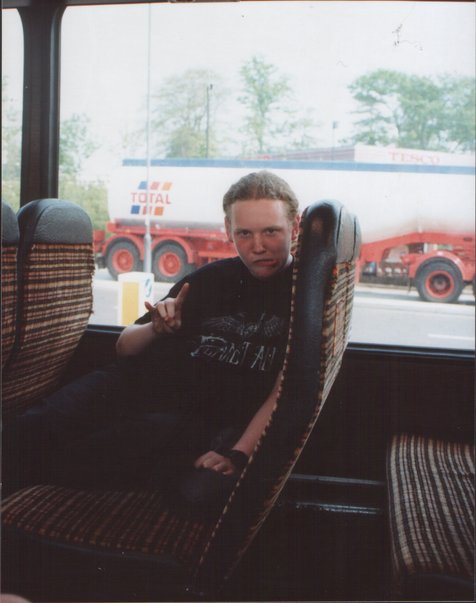
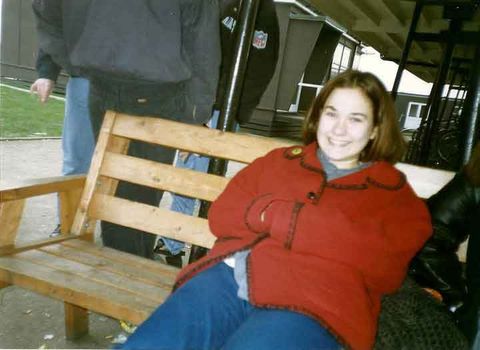
Askham Bar Park’n’Ride, 1993ish. Oh dear. Courtesy Stefan Berry.
Of course, not everybody feels the same way. My best friend from college was very frosty on the whole experience, and I suspect he thinks I’m mad for being remotely nostalgic about it. For most others I would think university superceded it in terms of sheer living experience. For me it was pretty special, and while I don’t wish to sound like I’m living in the past, it’s a nice place to visit once in a while.
By March my vision had continued to deteriorate to the extent I was becoming quite afraid. I made an emergency appointment to try and figure out what the hell was going on. I got a visit with an ophthalmologist that just happened to be a retinal specialist. She is French, had only been in the country a few months, as luck would have it, she was absolutely brilliant.
Generally speaking, nost of the senior female medical professionals seemed better listeners, and thus far I wasn’t convinced I was being heard. My wife describes this as a ‘specialist trap’, in other words if a doctor can’t diagnose a problem, they become indecisive and fail to advocate for the patient. You must see the right people. The right doctor at the right time makes all the difference. In the US system in particular, you must learn to stamp your feet. It’s very hard for me, as I am a classic British never-complain type, but when you’re really sick, that attitude can kill you.
This particular specialist took complete ownership of everything, and the more difficult the case got, the more interested she was.
I had some images taken of the eye, and she immediately identified inflammation of the nerve bundle behind the retina. This is generally known as posteriour uveitis, and it’s potentially very serious.
I had to undertake a lot of tests, includng tuberculosis and syphilis,(symptomatically similar) which amused me (yes it came back negative, you shits).
I ended up being prescribed an oral steroid (prednisone) in a shock dose, tapering off as time went on.
Steroids do odd things, it felt to me like I was highly caffeinated; I couldn’t sleep, put on a load of weight (yay!) but avoided going crazy -Apparently some people don’t respond well to them.
My vision stabilised, you wouldn’t call it good but at least it wasn’t getting worse. Uveitis is idiopathic in about half of the cases. In simple terms, it it not known what causes it. At this point it was purely hypothetical that my vision problems were linked to whatever was growing under my arm, immunology is complicated and requires highly specialised domain knowledge, there isn’t a magical test for it. The test is basically ruling out everything else.
Tumour won’t wait
The mass under my arm was no longer leaking, had fully re-accumulated, and was now starting to press on surrounding tissue, which caused pain. Around 1am on the 3rd of Aoril, I realised I could no longer sleep. Heat, painkillers and and ice-packs did nothing. I remember sitting on the bed in front of the wardrobe mirror thinking that I have to do something.
My wife had a continuing concern that it might burst, which could be life-threatening. My plan was to go to the ER, perhaps they could drain it, or at least get me some pain relief.
The emergency room reception wasn’t busy, a TV played one of house-hunting shows where a couple have an incredible budget. It was set in Fareham, just a few miles from my previous home, which made me laugh at least. I got triaged quickly. The feeling of the nurses – rarely hesitant to give an opinion – was that this thing needed to be out. No shit. A young doctor told me she couldn’t do anything invasive as if it was potentially malignant as that could be harmful. so, no drain. In the meantime she saw me wincing with pain and suggested an analgesic. I got a long lecture about opioids “You’ve seen the news, right?” And then they injected something with a long name into my IV
It felt a bit like the drop off the lift-hill on a rollercoaster, I actually held on to the sides of the bed, I felt a kick of nausea, thought I might throw up, then it passed. I was now, to use the medical term, as high as fuck.
The doctor got on the phone to the surgeon (I think it was 3am) and got it done – I would be operated on the next day. My bed was moved to a remote end of the ER and I entertained myself sending Beavis and Butthead gifs to my sister.
I don’t really know why, when you’re stoned everything is funny. It had to bag up my clothes and belongings and put on a gown.
.
Dark, dreamless sleep
I got visited by the anaesthetist, who explained that I would be asleep through it all, and a reflexologist, as the surgeon was concerned my nerves were getting damaged by the tumour, but this was luckily not the case.
My abiding memory of ‘serious hospital stuff’ is the flourescent lighting scrolling overhead as you are moved on a stretcher,that and the smell of alcohol swabs and the chirp of ringing telephones. The operating room actually resembles a hotel kitchen, lots of stainless steel, aluminium, and dark tiling. Only the huge overhead lights set it apart, and large pieces of equioment that go ‘beep’. I had to move laterally onto the OR bed and had my inflatable stockings switched on, which feel a bit like a python constricting around your shins. That’s all I remember
Waking up from a general anaesthetic is abrupt, it sounds like people are shouting.You wake up with a start, It’s such a deep sleep. I wasn’t aware of any pain, but my armpit felt like it was completely gone, which was weird but also a relief. My treat was a cup of crushed ice. I hadn’t eaten in about 17hrs.
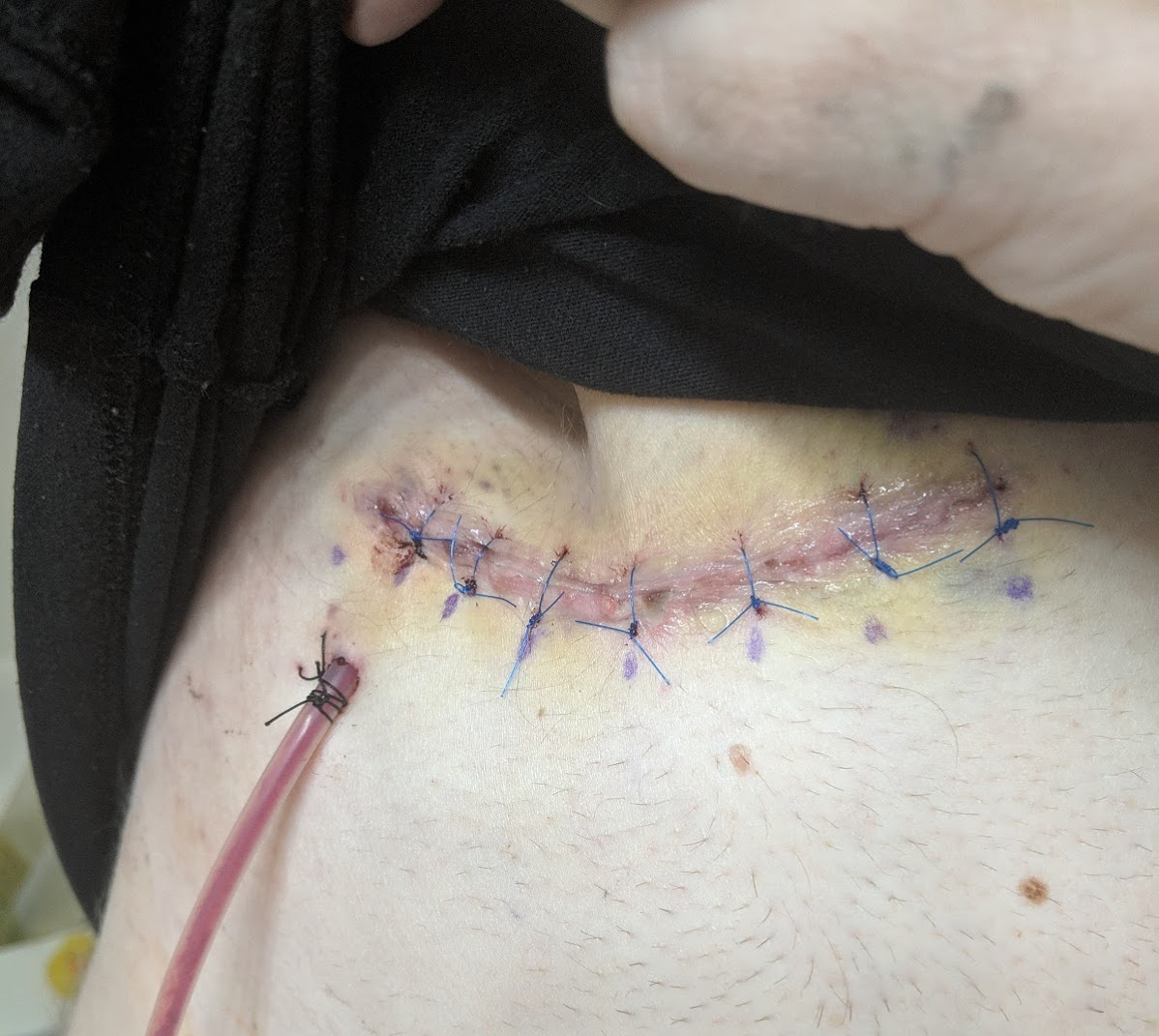
I spent a night in the hospital in a very pleasant room, and stood up for the first time in hours. I had a drain fitted, which is a plastic line from the surgical wound terminating in a rubber bulb.
Wound and drain line
This fucking thing would be the bane of my existence for a week. A fwwnurse ran in and told me if I needed to urinate it had to be into a plastic flask about the capacity of a litre. I filled that fucker to the brim, handed it to her and said “enjoy”. She didn’t even smile- heard it all before, I expect.
The surgeon visited and instructed me to monitor the drain, as he did not want it in there any longer than necessary, as it’s an infection hazard. He also explained the surgery was a success apart from having to leave some tissue which had tied itself around a vein. This would cause almost 5months of discussion as nobody seemed to think anything should remain in there, given how fast the tumour developed, but that story will have to wait.
At home, I had to learn to live with the drain, which was a great annoyance as the slightest pull on the tube was sharply painful. I had to sleep on my back (which I never do) so it was a tough few nights. On the very day I had just got used to it, I made the appointment to have it taken out.
It would be many weeks, and several labs before the tumour’s classification was known. In the meantime my oncologist wanted to discuss options. At that time it was possibly some radiation therapy along with some chemo. Great.
Black May
I had so many appointments in May I lost count. I’d had my drain and stitches out, my oncologist informed me that the mass was classifed as a ‘metastatic melanoma of unknown primary’ in other words, skin cancer, but no skin lesion would ever be found. This supposedly true in 10% of cases. I had the feeling the onvologist was not that convinced, but genetic markers gave him treatment options. I would be put on immunotherapy, which had the reputation for miraculous results.
I would require immunotherapy every three weeks for a year. I watched an educational video about chemo, and I mostly learnt to be grateful I wasn’t having chemo. The treatment building is a squat, brutalist structure near the mall. It struck me that nearly all of the people there looked very worse for wear. I asked the nurse if they looked like me when they walked in, but I don’t think she saw the funny side. </p
I’d got the call I was waiting for, from my older sister. “You’d better come”. It was time. My mum had been fighting terminal cancer since the previous August, over the new year we were waiting for the other shoe to drop. She’d become increasingly frail and had lost a shocking amount of weight. A couple of days earlier – Valentine’s Day, just to twist the knife a little – she’d had a precipitous decline. I didn’t fully understand the biological mechanism, but her failing liver being slowly consumed by cancer (which would go on to kill her) meant she was slowly poisoning herself, most evident of which was the loss of mental faculties. I had been warned she was in a pretty bad state, neurologically.
I had understood some of this when I arrived in Southwark, but not the extent of it. Leaving the underground at London Bridge and walking to my parent’s flat, a journey I had taken so many times in happier days, I did not know what to expect.
My sister opened the door. As I walked into the entryway I caught sight of my mum sitting upright in bed, apparently trying to get on her feet.
Is that my boy?
The words were feeble and quiet, but It sounded like an anvil dropping to my ears. She was obviously in very poor shape but wanted to get out of bed to meet me, to put on a bit of a show, to let me know she was alright. She wasn’t alright. Those four words were the last coherent thing I would hear from her. For the rest of the day she just looked into the distance, making no sound.
want to trip inside your head Spend the day there To hear the things you haven’t said And see what you might see I want to hear you when you call Do you feel anything at all? I want to see your thoughts take shape and walk right out
There was no life in her eyes. This hurt most of all. I remember looking deeply into them to see If I could see any flicker, any remnant of my mum in there (that U2 lyric would be swimming around my head for days. I still cannot listen to that song without thinking of the lonely evening train up to London) I was struck by the thought that his person – my mother – was no longer there; that all she was and ever had been had been taken from me, leaving just this corporeal thing, an empty shell. It sounds dramatic, but I had about 15 minutes alone with her and the memory is still absolutely devastating to me. She was so still and quiet. The slow destruction of a person -a parent – is a terrible thing to witness. In time I recognised this was worse than anything that followed. I wanted to scream, I was so upset, so confused, so absolutely wounded, but I kept it all in, because i was desperate to reach her. For me, this was worse than death; someone stripped of their faculties and their dignity, helpless, frail, and dying. What this disease can take of a person made me loathe it. This woman carried me into the world, and she had been so greatly diminished (she was tiny, tiny by the end) I still wince at the memory.
She would hang on for another 9 days, before passing away with us all there around 6.30pm on February 25th, 2 days after her 62nd birthday. I think my dad thought she’d held on for it, but I’m not sure if she had sufficient awareness to know either way. I almost had a nervous breakdown during that period, it came out as a bit of a tantrum in Tesco at Surrey Quays, but I was sleep deprived, under severe stress, and starting to crack. I had to get her a birthday card, and it sort of lit the fuse. No, I was not alright. I don’t know if I’m alright now.
I swore at the time that if anything like cancer happened to me I would not let it go that far, that I would not want anyone to see me like that. I have no idea what that might have entailed. Maybe I would jump off Beachy Head, or go and walk into the sea somewhere, let the waves claim me. I was, of course, completely full of shit, because I would get to find out. Life, as the saying goes, is a bitch. Also Irony when I think about it, thanks Alannis.
Who said God had no sense of humour?
Fate would take a run at me. I would get get the disease, not the same kind and mercifully not as severe, although in fact very dangerous. Melanoma is a big, big killer, and I really won the lottery in getting to remission. I may be half-blind, but in all likelihood it’s not going to kill me. Yes I’m tempting fate, but fuck fate.
Bad days are better than no days
There’s a sticker that says this at the reception desk at the infusion centre. It made me laugh at the time, because it’s a bit Oprah, but it’s definitely true. it’s easy to retreat into solipsism and self-pity, and I have definitely had those moments (“why me?” Why anyone, dickhead…) but you have to just keep going and be there. It’s a different story when you have a family. You learn to eat some shit and smile, then eat some more. Every day is a small victory. I know that if the worst were to happen to me, my family would be there to the end, and they would deal with everything that followed, because when the time comes, people find it in themselves. Every three weeks I sit down and get 200mg of immunotherapy drugs. The people there always impress me. Some are very much in the trenches with their illness, but they have such incredible spirit. It’s not at all what you might imagine a chemo treatment centre to be. I mean, it’s not cartwheels and fireworks – it’s still a godawful situation for all concerned, for fuck’s sake, but everyone just grins and bears it. For obvious reasons, I’ve a bad association with hospitals – the smell of disinfectant, rumbling air vents, and prospect of death – and I’ve come to realise it’s not like that at all.
This helped me understand what happened with my mum that day, finding that last shred of strength and dignity to try and show me that she’s okay; that through all she was enduring she would stand tall for her son.
I recently started to dream about her pretty regularly. The illusion of dreams is that you don’t really question context – “What am I doing here? Why can I fly?” I never question that she shouldn’t be there – although I had those dreams in the past. It’s just normal, she’s alive and we’re doing mundane things.
The month before she died, I think it was the first week of January, she had a distinct rebound, a period of high function I would learn is not unusual in the course of terminal illness. We had a nice weekend together, we chatted and watched a film (2004’s Collateral) and I thought for a moment that maybe she’s getting better. But it was not to be. Anyway, I mention because that’s how she is in my dreams. Just normal.
I don’t question it too deeply, but it’s a pretty comforting thing for my brain to do. Her headstone in a quiet hilltop Andalusian cemetary reads “Until we meet again”. I don’t know if that will happen. I don’t know if I believe such a thing is possible, but we’ll see I suppose. Hopefully later rather than sooner.


 I placed my phone in the console cup holder and turned the GPS app up loud enough to hear, and started the 14 mile run to the hotel, which involved a simple route of two freeways and a single exit.